Why Panels Actually Perform Better in the Cold
The solar panels work on a chemical principle of producing the electric currents, where most electronics profoundly dislike the heat, hot temperatures slightly increase the electrical resistance in the panel, thus preventing power flow. On a sultry afternoon during summers, a solar panel running on 35°C and greater is producing much less than its claimed-offer.
The inverse is true with cold air. On a clear January day during January in Calgary with the outdoor temperature hovering at about -10°C coupled with albedo enhancement courtesy of some fresh snow, systems can reach rated capacity fast or seventies due to reduced albedo. Cold, sun conditions among those listed by the Canadian Renewable Energy Association are some of the most conducive for deploying PV systems, a fact that stupefies most homeowners when first heard.
When Snow Cover Matters and When It Doesn't
Snow is a more legitimate concern, though it's rarely the season-long problem people expect. A heavy overnight dump can cover panels completely and halt production until the snow clears. That part is real.
What works in Calgary's favour is panel angle. Residential systems are typically installed at a tilt of 30 to 45 degrees, steep enough that snow slides off within a day or two under normal conditions. The dark surface of the panel absorbs heat from any available sunlight, which speeds melting at the glass. Wind helps too. Calgary's notorious Chinook winds can strip snow from rooftops in hours.
Meaningful losses happen mostly after prolonged snowfall with little sun and temperatures too cold for any surface melting. Those stretches do occur in December and January. For most Calgary winters, though, snow-related production dips are short and self-correcting rather than a sustained drag on annual output.
Shorter Winter Days Matter More Than Temperature or Snow
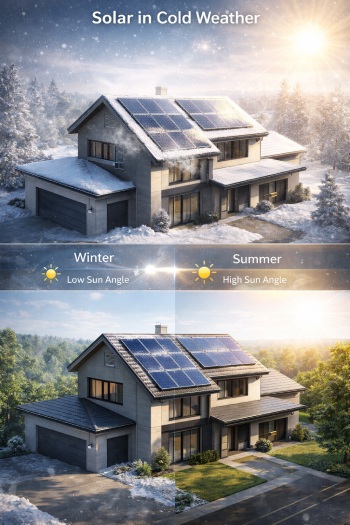
While cold temperatures and occasional snow get most of the attention, the bigger seasonal constraint in Calgary is simply the number of daylight hours available. In December, daylight can drop to just over eight hours per day, and the sun stays low on the horizon even at midday. That combination reduces both the duration and the intensity of solar exposure, regardless of how efficient the panels themselves are operating in the cold.
This is why winter production is always lower, even under clear skies. The system is working efficiently, but it has fewer hours and a weaker sun angle to work with. The trade-off comes in summer, when Calgary sees long days that can stretch past 16 hours of daylight. Those extended, high-angle sunlight periods allow systems to generate a surplus that balances out winter’s slower months. Over the course of a full year, it is this seasonal swing in daylight, rather than cold or snow, that plays the biggest role in shaping total solar output.