What Affects Solar Panel Lifespan and Long-Term Output?
Most homeowners are shocked by the realization of how long a well-installed solar system can actually last. The panels from reputable manufacturers often perform anywhere from 25 to 30 years of service with older systems from the later 1990's still producing electricity even today. Still, having a long life and being in full function two different things.
How Long Panels, Inverters, and Mounting Hardware Usually Last
Panels themselves are built to endure. Most carry 25-year performance warranties, and the physical hardware often outlasts those guarantees. Mounting systems, if properly installed, tend to hold up for the life of the panels with minimal attention.
Inverters are a different story. String inverters, the most common type in residential systems, typically need replacing after 10 to 15 years. Microinverters and power optimizers tend to last longer, often 20 to 25 years, but they cost more upfront. Budget for an inverter replacement at some point during your system's life. It's a predictable expense, not a surprise failure.
Why Output Naturally Declines Over Time
Gradual output decline is normal and expected. The industry term is degradation, and it simply means panels produce slightly less electricity each year as their materials age. The average degradation rate sits around 0.5% per year. A panel producing 400 watts at installation might produce roughly 345 watts after 25 years. That's still meaningful output, not a system in decline.
Premium panels from established brands often degrade closer to 0.3% annually, which is why panel quality matters at the point of purchase.
How Weather, Heat, Shade, and Installation Quality Influence Durability
Extreme heat is harder on panels than cold. High temperatures accelerate material wear over time, which is why panels installed in desert climates sometimes degrade slightly faster than those in milder regions.
Shade creates a different problem. Even partial shading on one panel can reduce output across an entire string. Poor installation compounds this, as panels mounted at the wrong angle or without proper ventilation underneath trap heat and wear faster.
The physical construction of modern panels is genuinely impressive. Tempered glass, aluminum frames, and multi-layered encapsulants allow most panels to withstand winds exceeding 130 mph and heavy snow loads. Quality equipment combined with professional installation removes most of the durability risks from the equation.
What Routine Maintenance Keeps Solar Panels Working Well?
Many home or business owners seem to be surprised once they learn that solar systems are not a great concern when it comes to regular intervals. Photovoltaic cells operate well all year' round without any interference. Most probably, the absence of moving parts is the main explanation for this.
A Simple Seasonal Maintenance Checklist
A quick check four times a year covers most of what you need. Each seasonal check should take no more than 20 to 30 minutes and can mostly be done from the ground.
- Spring: Clear any pollen or debris that built up over winter, check your monitoring app for any output dips, and visually scan for cracked panels or loose wiring from the ground.
- Summer: Look for bird nests near panel edges, check for shading from new tree growth, and confirm your inverter is running without error lights.
- Autumn: Clear fallen leaves from panel surfaces and gutters near the array, and schedule a professional inspection if you haven't had one in two years.
- Winter: Monitor output during low-light months and check for heavy snow accumulation after major storms.
When Cleaning Helps and When Rain Is Enough
In most climates, rainfall handles the bulk of surface cleaning naturally. Studies from the National Renewable Energy Laboratory suggest that soiling losses in rainy regions average less than 2% annually, which rarely justifies climbing onto your roof.
Cleaning makes a real difference in dry, dusty areas or after prolonged dry spells. If your output monitoring shows a gradual decline over several weeks without a weather explanation, a wash is probably worthwhile.
How to Handle Leaves, Dust, Bird Droppings, and Pollen
A soft brush with an extendable handle and a gentle rinse with a garden hose is all you need for most surface debris. Use lukewarm water, never high-pressure jets, which can crack seals or force water into panel frames.
Bird droppings are the one exception worth addressing quickly. Unlike dust, droppings block light on a concentrated spot and can cause localized overheating. A soft cloth dampened with plain water removes them without damage. Avoid abrasive sponges, metal tools, or anything that scratches the glass surface.
Never walk on panels. They aren't designed to bear weight and cracking one voids most warranties instantly.
What to Know About Snow Clearing and Winter Care
Light snow usually slides off on its own, especially on panels installed at a steep angle. There's no denying the temptation to clear it fast, but a thin layer of snow rarely justifies the roof safety risk.
Heavy accumulation after a significant storm is a different situation. Several inches of snow can reduce output substantially for days. If you choose to clear it, use a soft foam roof rake from the ground, working gently from the bottom edge upward. Never scrape downward across the panel surface.
If your roof pitch is steep, icy, or difficult to access safely, call a professional. A short-term output loss is far less costly than a fall.
How Can You Monitor Performance and Spot Problems Early?
Of course, prevention is always cheaper than cure, especially if one is dealing with a situation that has been quietly maturing for months. Once installation is complete, the monitoring app can broadcast the yield in real-time on a daily basis, taking around thirty seconds to see the app. Here are a few key points to have on hand:
Remember that your output will vary from one season to the next. An output dip after a cloudy week may not arouse much woe. Persistent performance loss in several sunny weeks is certainly a sign for concern.
What Normal Production Changes Look Like Across Seasons
Output in December will look nothing like output in July, and that's expected. Shorter days and lower sun angles mean less generation in winter, sometimes 40 to 50 percent less depending on your location. The concern isn't seasonal variation. It's when summer output is noticeably lower than the previous summer, or when production flatlines on a clear day.
Warning Signs of Trouble, From Dirt Buildup to Fault Codes
Visible grime, bird droppings concentrated on one panel, or patches of discoloration are worth acting on. A single dirty panel can drag down the output of others in the same string. Monitoring apps will often flag fault codes too. Don't ignore them, even if the system appears to be running fine on the surface.
When a Drop in Output Points to Shade, Wiring, or Inverter Issues
A new tree branch, a neighbor's extension, or even a satellite dish installed nearby can introduce shading that wasn't there before. Wiring faults and failing inverters tend to show up as erratic readings rather than a clean, steady decline. If output drops sharply and stays down across multiple clear days, call your installer rather than waiting to see if it corrects itself.
When Should You Repair, Replace, or Call a Professional?
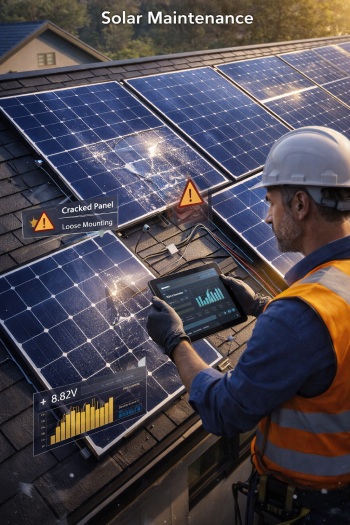
Not every dip in output means something is seriously wrong. Dust, seasonal shading, and short-term weather can all cause temporary drops. But some signs genuinely warrant attention, and knowing the difference saves you money and prevents small problems from becoming expensive ones.
Cracked panel glass, visibly bent or loose mounting hardware, and burn marks near wiring connections are all reasons to stop, step back, and call someone qualified. The same goes for persistent underperformance that your monitoring app can't explain after a week of clear weather.
Common Repairs Homeowners Should Never Attempt
Electrical work on a solar system is not a weekend project. Touching wiring, connectors, or inverter components without proper training creates real safety risks, including arc flash and electrocution. Roof-mounted systems add another layer of danger. Even if the fix looks simple, the combination of height, live electrical current, and weathered components makes it a job for a licensed solar technician.
Cracked glass also falls into this category. A hairline crack can let moisture into the panel, accelerating internal damage. Replacing a panel means disconnecting live circuits and handling equipment that costs between $200 and $400 or more per unit. That's not a DIY situation.
Why Inverter Replacement Is a Normal Part of System Ownership
Panels are rated to last 25 to 30 years. Inverters typically aren't. String inverters often need replacement after 10 to 15 years, and microinverters may last longer but aren't immune to failure. Budget roughly $1,000 to $2,500 for a string inverter replacement, depending on system size and labor costs in your area. Think of it less as a repair and more as a scheduled upgrade.
How Warranties, Service Plans, and Installer Support Affect Your Next Step
Panel warranties generally cover product defects for 10 to 12 years and performance guarantees for 25 years. Inverter warranties are shorter, often 5 to 12 years. Workmanship warranties from your installer typically cover installation-related issues for 1 to 10 years. Before calling a technician, check which warranty applies. Your installer may offer service plans that include periodic inspections, which are worth scheduling every three to five years even when nothing seems wrong.
Small Habits Keep Solar Savings Strong for Years
The maintenance part is pretty negligible - a sample of consistent practices can still make more power than you'd otherwise get in between the 25 to 30 years of their tenure. Stay tuned, monitor your system, and schedule a quick clean once or twice per year based upon the local conditions. Whatever you do, do not take your inverter for granted-for it is designed for replacement by 10 to possibly 15 years simply for regular wearing out. For any work requiring wires, roof access, or electrical componentry, always call in a properly trained tech rather than wading in yourself. Far sooner-than-major-quantities has been inexpensively-or-maintained is mostly all that can surely shudder in households with a return that typically costs tens of thousands of dollars. The system mostly takes care of itself. Your main job is to notice some changes and act on it, resolve it, before what started as a nuisance turns a full-blown costly one.
A public park bench in China equipped with solar panels can generate electricity to charge mobile devices, using stored solar energy to provide a convenient power source for visitors.
— Science girl (@sciencegirl) March 30, 2026
pic.twitter.com/skaYLjsEMQ