What Actually Moves the Numbers
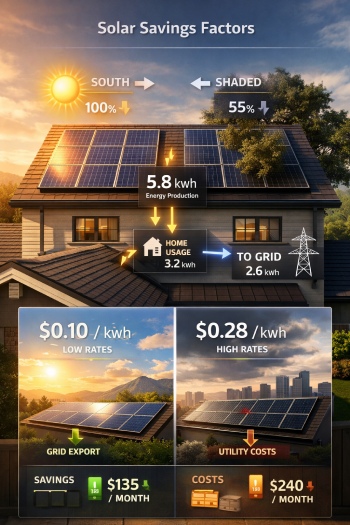
It is clear that the size of the system being installed is important. Every year, a 6 kW system in Phoenix will produce more than the same system in Seattle. This is because Arizona has more peak sun hours. The amount of peak sun hours in your vicinity every day dictates the amount of electricity your panels will generate over the course of a year.
The roof orientation, shading and so forth have as much as effect on yielding. South-facing roofs without tree cover can systematically outproduce larger systems set northward on their shaded or east-west-facing roofs. A 10% shading loss might seem insignificant, but multiply it over 20 years and that is a huge loss.
The utility rates are what most people rarely think of as the multiplier. Homeowners each charged $0.28 per kWh in California save nearly double of what persons each charged $0.14 per kWh in the Midwest save for every solar unit produced. This, by and large, gives the savings because they shall be even greater in future, while rate inflation, historically about 2% to 4% annually, must be taken into account.
Incentives that are there can change the perception of it completely. The federal Investment Tax Credit shall cover the 30% installation costs. However, other state rebates, net metering policies, and SRECs could add thousands more due to your location terms.
Net metering is worthy of mention in its own right. In cases where your system produces more than your home can use, the excess goes back into the grid and you will be credited by utility firms. Without net metering, oversized systems would lose some of their significant financial benefits.
Consumption Patterns and Self-Use of Solar Energy
How and when you use electricity inside your home plays a quieter but equally important role in determining savings. Solar panels generate the most power during midday hours, but many households consume more electricity in the morning and evening. If a large share of your solar production is exported to the grid instead of used instantly, your savings depend heavily on how your utility compensates that excess energy.
Homes that align usage with production tend to capture more value. Running appliances like dishwashers, laundry machines, or EV chargers during daylight hours increases what’s known as self-consumption. In markets where export rates are lower than retail electricity prices, this difference becomes critical. Over time, even small adjustments in daily energy habits can noticeably improve the financial return of a solar system without changing the system size itself.